
Peer reviewed by Dr. Abdul Rahman Qalandari, Specialist Prosthodontist
When several teeth are damaged, worn, missing or failing at the same time, treating them in isolation rarely gives a lasting result. Full mouth rehabilitation takes a different approach. It is a planned, comprehensive process that restores the health, function and appearance of your entire mouth as one connected system.
This guide explains what full mouth rehabilitation involves, who it suits, the typical stages of treatment, and what you can realistically expect. It is written for patients in Abu Dhabi who are considering more extensive dental work and want to understand the process clearly before committing.
What Is Full Mouth Rehabilitation?
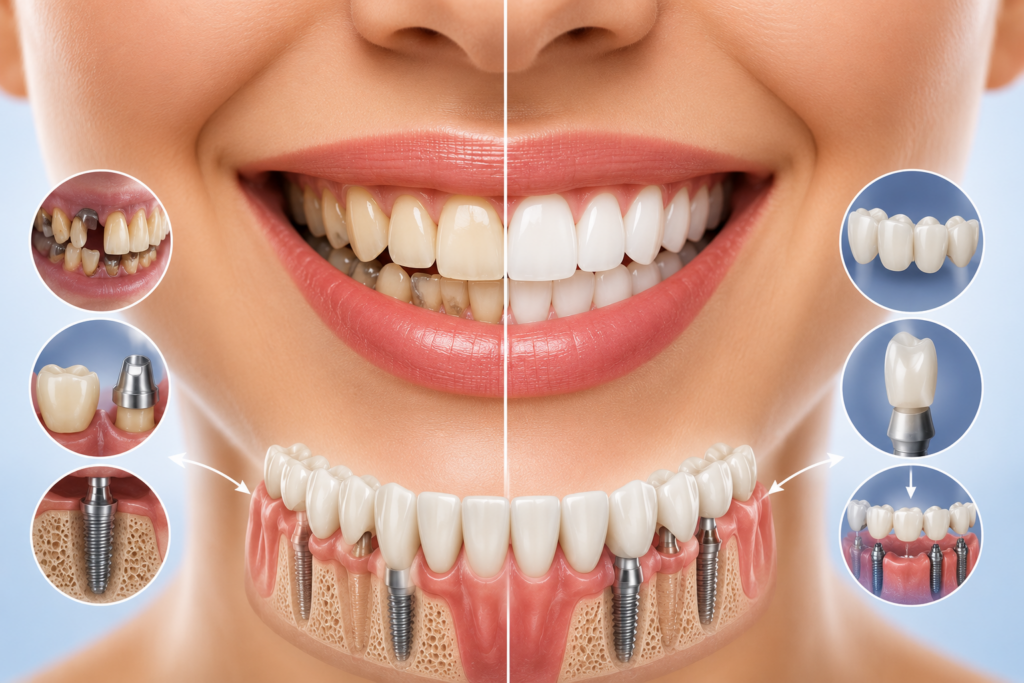
Full mouth rehabilitation, sometimes called full mouth reconstruction or full mouth restoration, is the coordinated rebuilding of all or most of the teeth in the upper and lower jaws. Rather than addressing one problem at a time, it treats the mouth as a whole, restoring the way your teeth look, function and bite together.
It usually combines several treatments into a single, structured plan. These can include crowns, bridges, veneers, dental implants, root canal treatment and gum therapy, sequenced in a logical order so that each step supports the next.
The aim is a stable, comfortable and natural-looking result that allows you to eat, speak and smile with confidence, while protecting your long-term oral health.
Who Needs Full Mouth Rehabilitation?
Full mouth rehabilitation is not for routine dental care. It is considered when multiple, connected problems affect the mouth and a piecemeal approach would not deliver a predictable outcome.
You may be a candidate if you have:
- Extensive tooth wear from grinding, acid erosion or ageing that has shortened or flattened the teeth
- Multiple missing teeth affecting your ability to chew or your facial support
- Several failing or heavily restored teeth with large old fillings, cracks or repeated breakages
- A collapsed or uneven bite that places strain on the teeth, muscles or jaw joints
- Widespread decay or gum disease that has compromised many teeth at once
- Trauma that has damaged a number of teeth together
A common feature in many of these cases is a loss of what dentists call the vertical dimension, meaning the natural height of the bite has reduced over time. Rebuilding this correctly is one of the central aims of a full mouth rehabilitation.
The Full Mouth Rehabilitation Process
Because every mouth is different, no two rehabilitation plans are identical. However, the process generally follows a clear sequence designed to be methodical rather than rushed.
1. Comprehensive assessment and diagnosis
The process begins with a detailed examination of your teeth, gums, bite and jaw joints. This typically includes digital scans, X-rays, photographs and impressions or scans of your teeth. Your dentist assesses not just individual teeth but how everything works together.
2. Treatment planning
The findings are used to build a step-by-step plan. This is where the order of treatment is decided, for example stabilising the gums and treating any infection before restorative work begins. In many cases a digital design or a wax-up model is created so you can preview the intended result before treatment starts.
3. Foundational and stabilising treatment
Any active problems are addressed first. This may involve gum disease treatment, root canal treatment for infected teeth, or the removal of teeth that cannot be saved. A healthy foundation is essential before rebuilding begins.
4. Restorative and reconstructive phase
This is the rebuilding stage, where the planned restorations are placed. Depending on your needs, this may include:
- Dental crowns and bridges to restore and replace teeth
- Dental implants to replace missing teeth with stable, long-lasting support
- Veneers to improve the appearance of front teeth
- Adjustments to establish a balanced, comfortable bite
5. Finishing and long-term care
Once the restorations are in place, the bite is refined and the result reviewed. A protective night guard is often recommended, particularly if grinding contributed to the original wear. Regular reviews then help protect the work over the years that follow
How Long Does Full Mouth Rehabilitation Take?
Full mouth rehabilitation is a process rather than a single appointment, and the timeline depends on the complexity of your case. Straightforward cases may be completed over a few months, while those involving implants and healing time can extend across several months or longer.
Your dentist will give you a realistic timeline at the planning stage. The emphasis is always on doing each step well and allowing proper healing, rather than working to a fixed deadline.
Is Full Mouth Rehabilitation Painful?
Treatment is carried out under local anaesthetic, so the procedures themselves are designed to be comfortable. Sedation options can also be discussed for longer or more involved appointments.
It is normal to experience some tenderness or mild soreness after individual stages, particularly following extractions or implant placement. This is usually manageable with standard pain relief and settles within a few days. Your dentist will give you clear aftercare guidance at each stage so you know what to expect.
Benefits and Considerations
Full mouth rehabilitation can be life-changing for the right patient, but it is a significant commitment of time and investment. A balanced view helps you make an informed decision.
Potential benefits include:
- Restored ability to chew and eat comfortably
- A stable, balanced bite that reduces strain on teeth and jaw
- Improved appearance and confidence in your smile
- Protection of remaining healthy teeth and supporting structures
- Treatment delivered as one coherent plan rather than disconnected fixes
Considerations to keep in mind:
- It requires multiple appointments over an extended period
- Results depend on healthy gums and good ongoing oral hygiene
- Restorations need maintenance and periodic review over time
- Outcomes vary from patient to patient, and your dentist will advise on what is realistic for you
Why Abu Dhabi Patients Choose Lilac for Complex Care
Full mouth rehabilitation draws on several areas of dentistry at once, from gum health and root canal treatment to implants, crowns and bite design. This is why it benefits from a specialist-led, coordinated approach rather than separate, unconnected treatments.
At Lilac Medical Centre, our team of specialists plans and delivers full mouth rehabilitation in Abu Dhabi as a single, considered process, with transparent communication in English and Arabic at every stage. If your case involves restoring or replacing crowned teeth, you may also find our guide on what to expect during a dental crown treatment a helpful starting point.
Frequently Asked Questions
What is a full mouth rehabilitation?
Full mouth rehabilitation is the coordinated rebuilding of all or most of the teeth in both jaws. It combines treatments such as crowns, bridges, implants, veneers and gum therapy into one structured plan, restoring how your teeth look, function and bite together.
What is the full mouth rehabilitation process?
It typically follows five stages: a comprehensive assessment, detailed treatment planning, foundational treatment to stabilise the gums and any infected teeth, the restorative phase where teeth are rebuilt, and a finishing phase to refine the bite and protect the result with long-term care.
How painful is full mouth restoration?
The procedures are carried out under local anaesthetic and are designed to be comfortable. Some tenderness or mild soreness can follow individual stages such as extractions or implant placement, but this is usually manageable with standard pain relief and settles within a few days.
What is another name for full mouth rehabilitation?
It is also known as full mouth reconstruction or full mouth restoration. The terms are used interchangeably to describe the same comprehensive, whole-mouth approach to restoring dental health, function and appearance.
How long do the results last?
With healthy gums, good oral hygiene and regular reviews, the results can last many years. Individual restorations such as crowns and implants are durable, though they benefit from maintenance over time. A protective night guard is often recommended to safeguard the work, especially if grinding was a factor
Take the First Step
If you are living with several dental problems at once, full mouth rehabilitation may offer a way to restore both your oral health and your confidence. A good place to start is a thorough assessment and an honest conversation about your options. Book a consultation with our specialist team at Lilac Medical Centre in Abu Dhabi to discuss a personalised treatment plan.

