
Whitening and bleaching both improve teeth color, but they differ in strength, depth of action, and expected results. Understanding the key differences helps you choose the safest and most effective option for whiter teeth and a brighter smile.
Learn more about teeth bleaching services at Lilac Medical Centre.
What Is Teeth Whitening?
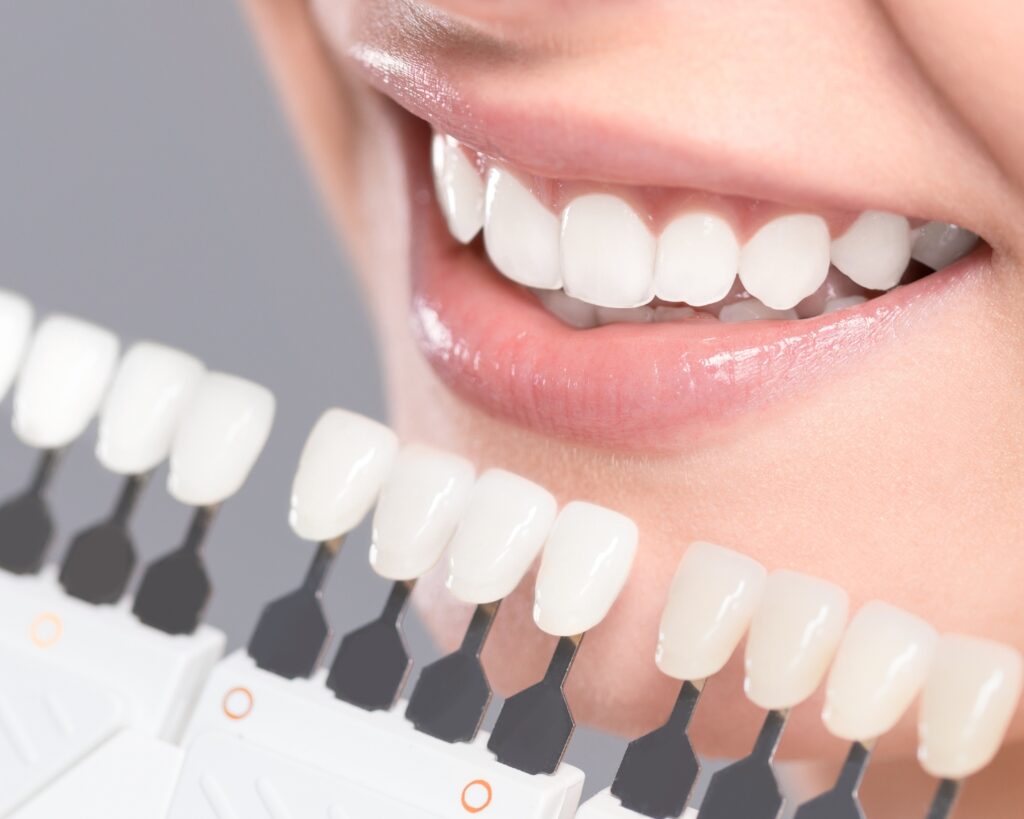
Teeth whitening refers to any whitening treatment that removes surface stains and restores teeth to their natural color. It targets extrinsic tooth stains caused by coffee, red wine, tobacco, and poor oral hygiene. Whitening works on superficial stains that sit on the outer layer of tooth enamel.
Most over-the-counter products, including whitening toothpastes, gels, and kits, fall into this category. These products contain a mild whitening agent, often low-concentration hydrogen peroxide or carbamide peroxide, designed to gently remove stains. Professional teeth whitening performed in a dentist’s office uses stronger formulas but still works within your natural shade.
Whitening improves brightness but doesn’t dramatically change deep and intrinsic stains inside the tooth structure. It works best when you want to refresh dull teeth without altering your natural teeth beyond their baseline shade.
What Is Teeth Bleaching?
Teeth bleaching treatments use a stronger bleaching agent, usually higher concentrations of hydrogen peroxide or carbamide peroxide, to penetrate enamel and address intrinsic and deep stains. These stains may result from aging, certain medications, trauma, or long-term discoloration.
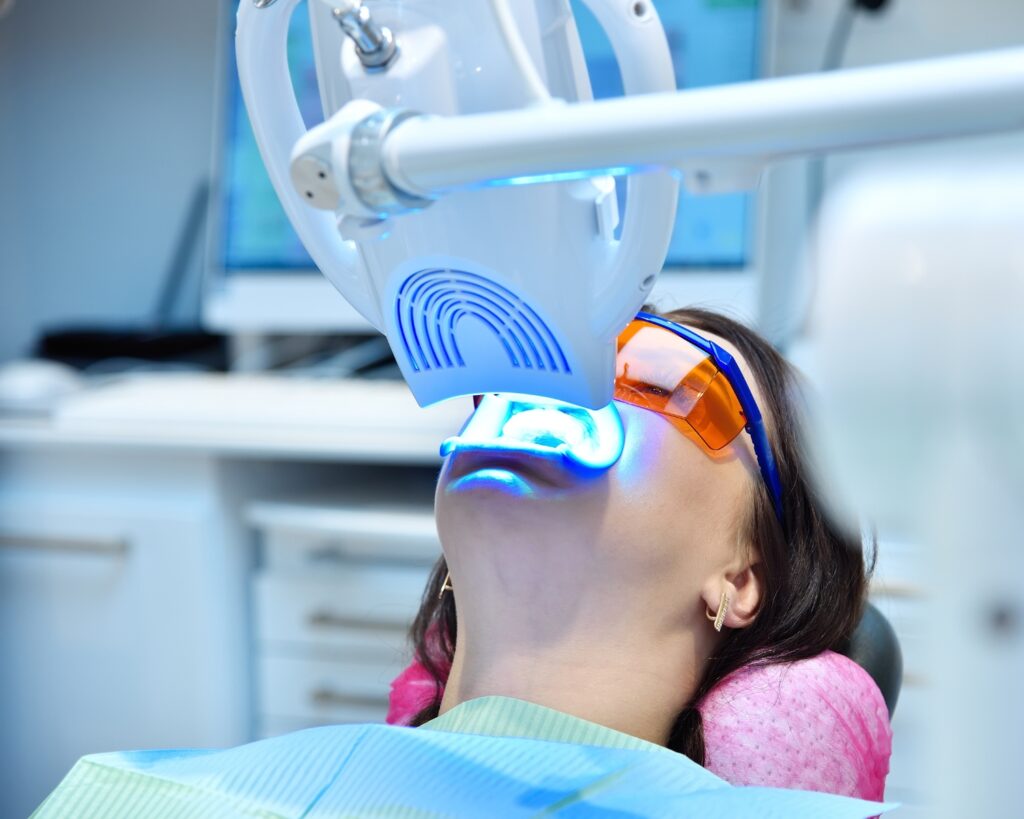
Professional bleaching often involves laser treatments or power bleaching techniques. During laser whitening, a laser activates the bleaching gel to accelerate results. Dentists apply a protective gel to shield soft tissues and minimize gum irritation before starting the procedure.
Bleaching can lighten teeth several shades lighter than their natural shade, sometimes in just one session, delivering dramatic results. However, stronger solutions increase the risk of temporary sensitivity, especially in patients with sensitive teeth or weakened enamel.
Key Differences Between Whitening and Bleaching
The biggest differences between teeth whitening and bleaching include depth of action, speed, and results. Here are the main distinctions:
- Depth of Action: Whitening removes superficial and extrinsic stains on tooth enamel. Bleaching removes intrinsic stains and deep stains within the tooth structure.
- Active Ingredient Strength: Whitening products use lower concentrations of hydrogen peroxide or carbamide peroxide. Bleaching uses stronger bleaching gel formulas.
- Results: Whitening restores your natural color. Bleaching can make teeth several shades lighter than their natural shade.
- Speed: Whitening treatment often requires multiple applications. Professional bleaching may deliver visible changes in just one session.
- Sensitivity Risk: Bleaching carries higher inherent risks of temporary sensitivity and gum irritation.
- Professional Supervision: Bleaching typically requires a visit to a dentist’s office. Whitening can be done both at home and at a dental clinic.
- Cost: Whitening products cost less upfront. Professional bleaching treatments cost more but produce faster, more dramatic results.
When deciding between whitening vs bleaching, consider the severity of tooth discoloration, your tolerance for tooth sensitivity, and how dramatic you want the outcome.
Which Option Is Safer Between Teeth Bleaching and Whitening?
The safety of bleaching and whitening procedures depends on supervision and proper use. Whitening toothpaste and over-the-counter options pose a low risk when used correctly. However, aggressive, unprofessional use may wear enamel and increase sensitivity.
Professional bleaching performed by a qualified dentist reduces the risk of complications. The dentist protects soft tissues, monitors exposure time, and applies a protective gel to limit gum irritation. The American Dental Association recommends consulting a dental professional before starting bleaching or laser whitening, especially if you have tooth decay, sensitive teeth, or compromised oral health.
Both whitening and bleaching can cause temporary sensitivity, which usually resolves within a few days. Patients with thin enamel, untreated cavities, or poor oral hygiene should address underlying issues first to protect long-term tooth health.
How Long Do Teeth Bleaching and Whitening Results Last?
The results of teeth whitening and bleaching usually last 6 months to 3 years. The duration of your results depends heavily on oral hygiene and lifestyle habits. Patients who maintain good oral hygiene and avoid heavy-staining substances such as red wine or tobacco enjoy longer benefits.
Whitening results may last several months with proper maintenance, while professional bleaching or laser teeth whitening often lasts one to three years. However, no whitening treatment permanently prevents future discoloration. Aging, certain medications, and dietary habits naturally affect tooth color over time.
Touch-up whitening gels or custom trays from your dentist can help maintain your brighter smile. Consistent brushing, flossing, and professional cleanings extend the lifespan of both whitening and bleaching results.
Who Should Choose Teeth Whitening?
Choose teeth whitening if you want to whiten teeth gradually while staying close to your natural shade. Whitening is most effective for surface stains and mild tooth discoloration caused by lifestyle factors. Whitening may suit you if:
- You have extrinsic stains from coffee, tea, or red wine.
- Your teeth appear dull but not deeply discolored.
- You prefer over-the-counter products or whitening kits to professional bleaching.
- You want a conservative teeth whitening procedure with minimal risk.
- You experience mild tooth sensitivity and want to reduce the risk of sensitivity.
- You want to remove stains and restore brightness without a dramatic change.
- You practice good oral hygiene and maintain healthy enamel.
Whitening remains a practical option for patients seeking subtle improvement and healthier-looking pearly whites without aggressive intervention.
Who Should Choose Teeth Bleaching?
Choose teeth bleaching if you want teeth several shades lighter than your natural color. Bleaching is most effective for intrinsic stains, deep stains, or discoloration caused by aging or certain medications. Bleaching may suit you if:
- You have stubborn, deeply discolored teeth.
- Whitening products failed to deliver the desired results.
- You want dramatic results quickly.
- You are preparing for a major event and prefer professional bleaching or laser treatments.
- You understand the inherent risks, including temporary sensitivity.
- You want power bleaching supervised by a dentist in a professional setting.
Professional teeth whitening with bleaching agents delivers stronger, faster results, although it can be more expensive.
Teeth Bleaching at Lilac Medical Centre
Lilac Medical Centre offers professional teeth bleaching designed to safely lift deep stains and deliver noticeably whiter teeth. Our in-office treatment uses high-quality hydrogen peroxide–based bleaching gel, carefully applied and monitored by an experienced dentist to protect tooth enamel and soft tissues.
We assess your oral health, identify the cause of tooth discoloration, and customize the bleaching agent strength to minimize tooth sensitivity while delivering dramatic results.
Book your teeth cleaning appointment at Lilac Medical Centre today and keep your smile fresh, healthy, and confident.
FAQs
What is the difference between teeth whitening and bleaching?
Teeth whitening removes surface stains and restores natural teeth to their original shade. Bleaching can lighten teeth up to 8 shades, making them whiter than naturally possible.
Does laser teeth whitening work better?
Laser teeth whitening activates bleaching gel with laser light, often producing faster results in just one session. It can achieve more dramatic results than standard whitening treatment. Regular dental checkups can help maintain the health of your teeth and gums after whitening treatments.
What are the side effects of teeth whitening and bleaching?
Teeth whitening treatments are not considered safe for children under the age of 18. Furthermore, bleaching is not recommended for people with gum disease, worn enamel, or for pregnant or breastfeeding women. Gum irritation or burns can occur if the whitening agent comes in contact with your gums.
Can whitening toothpaste replace professional teeth whitening?
Whitening toothpaste helps remove superficial stains but cannot treat intrinsic stains or significantly change tooth color. Professional teeth whitening or bleaching treatments provide stronger outcomes.
Does bleaching damage tooth enamel?
When performed by a dentist and used correctly, bleaching does not damage tooth enamel. However, overuse or improper application may increase tooth sensitivity or irritate soft tissues.

